...is where creativity and technology intertwine. We inspire you with our showcase of global tech trends and best practices in film, TV and streaming, and reveal new ways how you can shape the media industry of tomorrow.
MTHCON26_Programm
Trotz einer langjährigen Teilnahme an dieser Konferenz [1] war es lange Zeit nicht sicher, ob in diesem Jahr eine erneute Anwesenheit möglich sein und erfolgen würde. Zum materiellen Teil: Die Location ist nach wie nicht durchgehend barrierefrei zu nutzen [2], eine entsprechende Parkgelegenheit konnte nicht bereitgestellt werden. Zum immaterillen Teil: die Entscheidung für einen virtuellen Zugang via APP setzt voraus, ein ganzes Paket von persönlichen Daten preiszugeben, selbst das Geburtsdatum. Auch ist nach wie vor offen, welche der Veranstaltungen live oder als Mitschnitt zur Verfügung stehen könnten.
Die Entscheidung, dennoch anzureisen und all die besonderen Voraussetzungen vor Ort zu meistern, hat mit der Auswahl der GesprächspartnerInnen zu tun - die wir auf der Folgeseite nochmals in drei Exklusivinterviews präsentieren werden - da sie auf das Schwerpunkt-Thema AI aus einer jeweils ganz eigenen langjährigen Praxis heraus Stellung beziehen können: dem Journalismus, dem Bewegtbild und der Fotografie [3].
Hier Liste der avisierten GesprächspartnerInnen und das erste umfängliche Gespräch des ersten Tages:
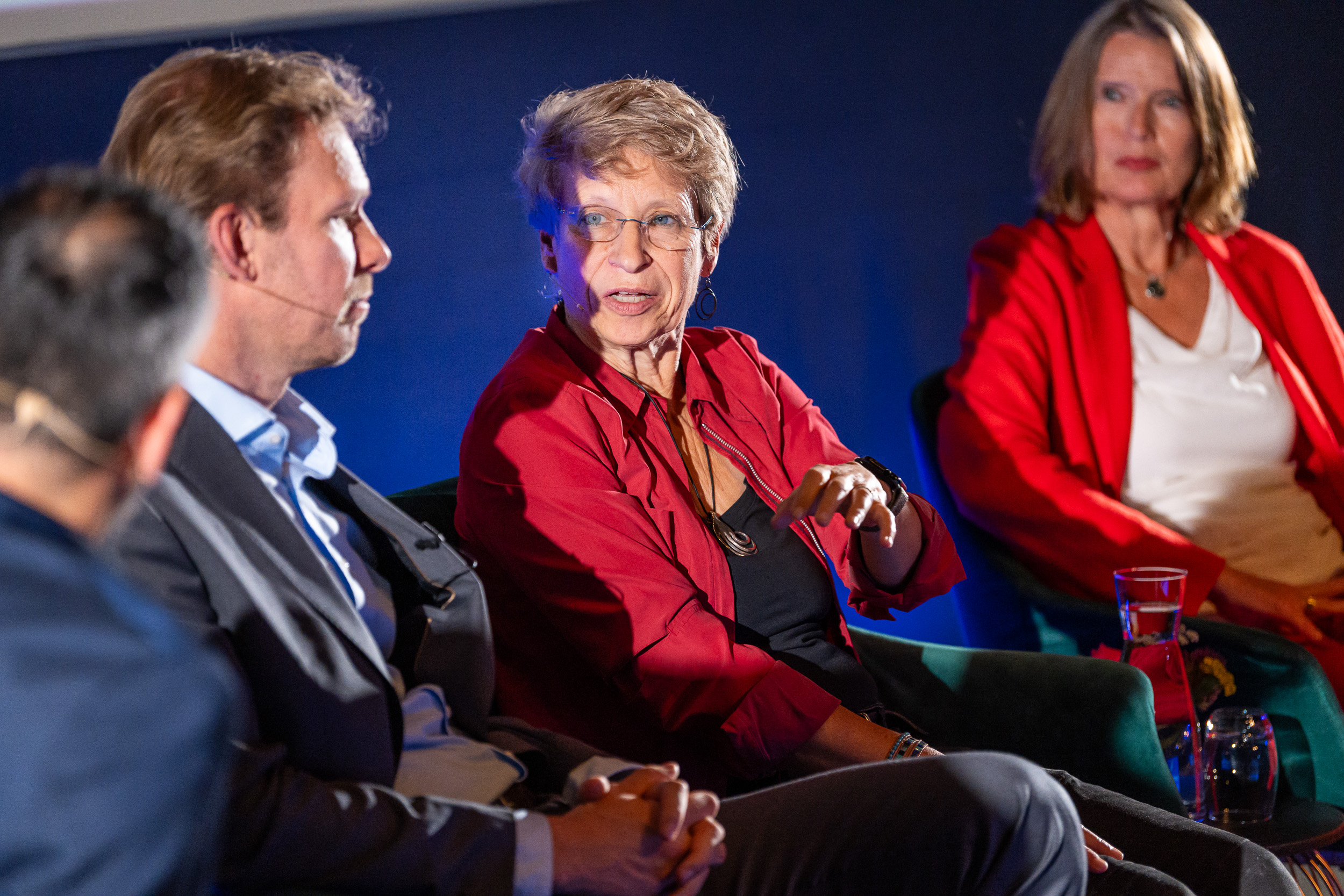
vlnr.: Markus Knall | Ulrike Langer | Alexandra Borchardt
Es gelten die Regeln des Urheberrechts Lars Huebner
Thousands of articles, published fully automatically in one election night. Germany’s first Director of AI at SPIEGEL Group on what breaks when AI becomes the layer between journalism and its audiences. And a debate on whether "AI-generated" can become a quality label.
Behind all of this sits a bigger question: what is journalism’s place in a world where AI is reshaping both how news is made and how it reaches people? Our programme partners Media Innovation Center Babelsberg (MIZ) and GenKI4Media bring the experts and the evidence to #MTHCON26 on SEP 29.
AI is changing journalism for the second time in a decade. Platforms reshaped how news travelled and who controlled its reach. Now generative AI is going further, and making the questions of independence and visibility even more urgent.
Presented by Media Innovation Center Babelsberg (MIZ), the Journalism & Tech track explores what that means in practice.
INTRODUCING: THE SESSIONS
Horizon Stage – September 29
The Agent Layer: Finding Journalism’s Place in the AI Ecosystem
Soon, most of the entities accessing journalism won’t be people. Ole Reissmann, Germany’s first Director of AI at SPIEGEL Group, examines what it takes for newsrooms to show up in the emerging agent layer, and what breaks structurally when AI sits between media organisations and their audiences.
Adapt or Resist? Journalism Between Platform Power and AI
Platform power challenged media independence. Algorithms competed with editorial judgement. Reach outweighed relevance. Now generative AI is driving the next transformation. The panel asks:
✔️ What lessons from the platform era remain applicable?
✔️ Will smarter strategies and stronger regulation do the job, or does journalism need entirely new approaches?
✔️ Can the AI layer be an opportunity for journalism to reposition itself as a trusted source?
Join Rebecca Ciesielski, Ole Reissmann and moderator Nhi Le for the debate.
INTRODUCING: THE SPEAKERS
OLE REISSMANN is the first Director of AI at SPIEGEL Group, working on how one of Germany’s most-read news organisations puts AI to work in strategy, transformation and product development. He has spent his career building at the intersection of journalism and technology.
REBECCA CIESIELSKI is a reporter at the AI + Automation Lab of Bayerischer Rundfunk, specialising in algorithmic accountability. Her investigations examine how AI, algorithms and automated systems shape society and the people within it.
NHI LE is a journalist, moderator and author whose work focuses on social policy and digital media culture. In 2019, ZEIT listed her as one of the 100 most important young East Germans; in 2021, Medium Magazin included her in its Top 30 under 30 journalists in Germany.
INTRODUCING: THE SESSIONS
Horizon Stage – September 29
How to publish 5,000 articles in one election night
In his keynote, Markus Knall (Editor-in-Chief and Director Content, IPPEN.MEDIA) takes stock of where AI adoption in news production stands today and shares his vision: publishing thousands of articles fully automatically on election night, without compromising on quality. The next step, he argues, is not the automation of processes, but the automation of quality.
“AI-generated” as the new “Made in Germany”?
Knall’s bold vision goes straight into debate:
✔️ How can quality be ensured when future AI models increasingly train on AI-generated content?
✔️ With search no longer reliably driving traffic, what strategies are actually working?
Join Alexandra Borchardt, Ulrike Langer, Jürgen Geuter and Markus Knall as they examine what AI-assisted content creation means for quality, trust and the people still doing the editorial work.
And that is not all: project partners from the GenKI4Media consortium present their latest use cases in four live talks, hands-on demonstrations and a workshop, showing what generative AI tools for media look like when put to work. More details to follow soon.
INTRODUCING: THE SPEAKERS
MARKUS KNALL is Editor-in-Chief and Director Content at IPPEN.MEDIA, where he has been at the forefront of AI adoption in German digital publishing. As a prominent advocate for local journalism, he initiated the cross-industry Local Journalism Day #näherdran.
ALEXANDRA BORCHARDT is a senior journalist, researcher and advisor with a background spanning major newsrooms, academia and policy. She is a former Managing Editor of Süddeutsche Zeitung and a Senior Research Associate at the Reuters Institute at Oxford.
JÜRGEN GEUTER is Research Director at ART+COM, working on the conceptualization, implementation and testing of new technologies in the context of spatial new media. As a writer and sociotechnologist, he focuses on the intersection of technology, society and politics.
ULRIKE LANGER is a German-American journalist specialising in media innovation and AI. She writes the weekly bilingual newsletter News Machines / News Maschinen and covers the industry as US correspondent for Kress Pro.
[2] Vor allem der Raum der "Expert Stage" bei Rotor Film ist nur über eine Treppe zugänglich, weder im Verlauf der Konferenz noch danach, um dieser Einladung zu folgen.
Under the title "How To Debate: Zusammenhalt stärken statt Gräben vertiefen" (How to Debate: Strengthening Cohesion Instead of Deepening Divides), researchers from the Weizenbaum Institute present short inputs on filter bubbles, disinformation and political polarisation.
They then discuss them with Brandenburg Minister René Wilke, Friederike Sittler (Deutschlandradio) and Prof. Christian von Sikorski (FU Berlin). The evening is moderated by Sascha Friesike.
[3] Hinzu kam am Ende des zweiten Tages noch eine überraschende Begegnnug mit einer Persönlichkeit aus dem Bereich Sound.
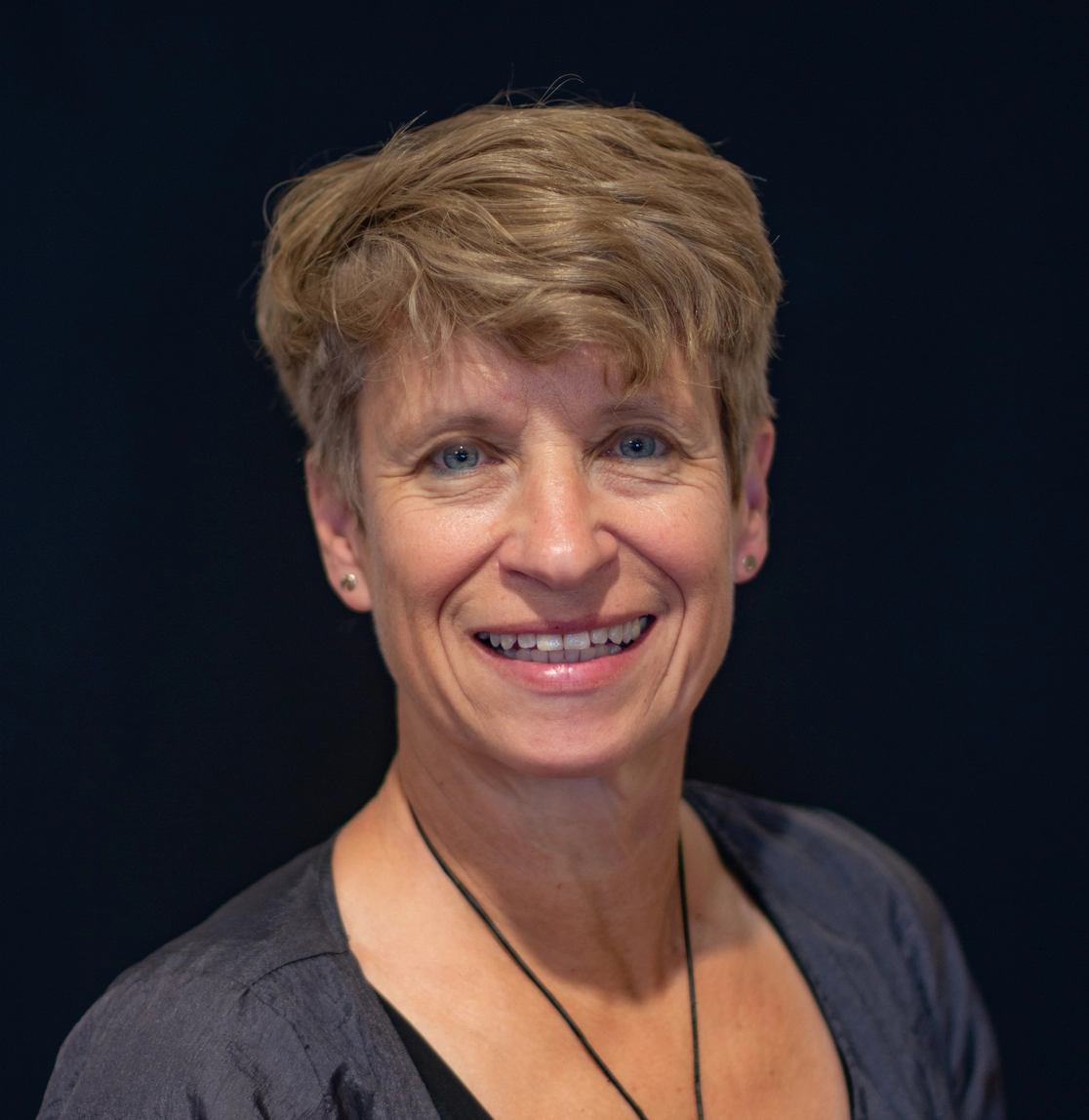
[4] Ich bin Ulrike Langer, Medieninnovationsjournalistin und Exil-Kölnerin. Ich lebe und arbeite seit 2011 in meiner Wahlheimat USA und analysiere und berichte über Medieninnovationstrends für die Fachzeitschrift Kress Pro. Ich stehe außerdem regelmäßig als Keynote-Speakerin auf der Bühne von Medienkonferenzen und gebe Webinare. Mehr Infos über mich findest Du auf meiner Website ulrikelanger.com.
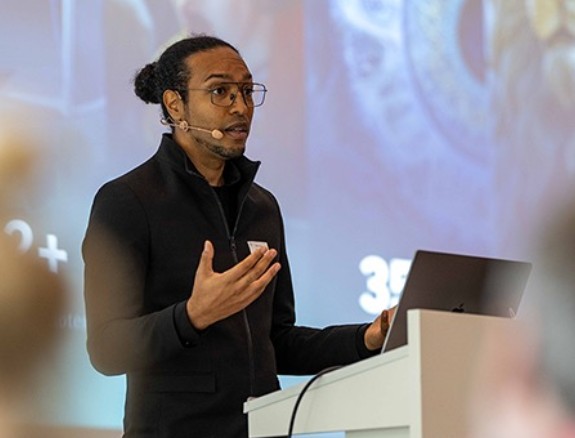
Jacques Alomo is an AI innovator, creative technologist and founder of creamlabs AI. With more than sixteen years of experience in motion and interface design, he has led creative teams and worked with brands including BMW, Samsung, E.ON, Siemens, Deutsche Telekom and Roland Berger. Through more than 180 keynotes and workshops, he has trained over 6,500 creatives and professionals in working with generative AI.
Tim Deussen is the creative technologist of Studio Deussen in Berlin and a creative producer working at the intersection of AI, XR, and human-centered storytelling. His work focuses on how emerging technologies can expand cinematic language, support authorship, and open new production pathways across film, immersive media, and virtual production. He is particularly interested in AI as a creative collaborator that can reduce technical barriers while preserving emotional depth, artistic intent, and cultural value
 DaybyDay ISSN 1860-2967